Is St. Simon Still Alive?
Author: Jane Nemecek, published: 6th June 2023, pictures: Sporthorse-Data
Few thoroughbred stallions gained such a reputation as marvelous St. Simon - and few achieved so much at stud. St. Simon was born in 1881, and for almost a century, he was a respected and valued member of the bloodlines' roster all over the world.

His descendants are still quite common in five-generation pedigrees, but St. Simon himself is long gone from fiery pedigree debates. Will he ever return?
Before anything else, I'd like to remind that St. Simon, an excellent male power in pedigrees, cannot be denied one important role: he was a great damsire, too. Let's name Rock Sand, John o'Gaunt, Bridge of Earn, and less famous yet influential stallions like Gorgos, Cannobie, and Bridge of Canny (Argentina). Plucky Liege and Frizette were granddaughters of St. Simon and immortal broodmares; great-grandsons would include La Farina, Phalaris, Havresac II, Papyrus, or Manna.
The problem with greatness is that we somewhat lose our measuring scales. St. Simon would definitely become a legend for his damsire record alone - and it's quite remarkable that he totally overshadowed it as a sire of sires, to the point we're not even much aware of his damsire role.
The headline question is still easy to answer, but the sireline exists for 140 years and at least 14 sons created significant branches. The whole line has been through uncountable key events, which shaped both the sireline and the breed.
Now, in its third century (!) of existence, St. Simon is just a shadow of the former empire. It means that to tell just the present story would say just that: a shadow. So, although there's no other option than to be very superficial, St. Simon still deserves a full overview of its existence.
Simonian (1888)
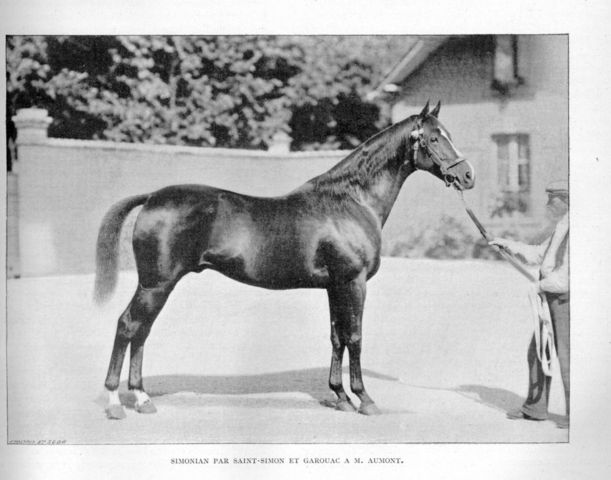
Fast enough to be a stakes-placed two-year-old over 6 furlongs, Simonian ran second to Le Nicham in the Champion Stakes at five. He sired numerous stakes winners, especially stayers, in France between 1901 and 1913. He was the French leading sire in 1910 and 1912.
Simonian's best foal was Nuage, the 1910 Grand Prix de Paris winner. He was bought by Graf Lehndorff to stand in Germany and led the sires' list from 1915 to 1917. More importantly, he was a damsire of Alchimist, Aditi (damsire of Ticino), and the third sire of Arjaman (damsire of Nebelwerfer and Neckar).
Nuage left two sons and even had a grandson at stud, so the latest progeny was born in the early 1950s, but factually, its influence ended with Nuage's career in the late 1920s.
- Simonian (GB), 1888
- De Viris (FR), 19091. Poule d'Essai des Poulains
- Nuage (FR), 1907
- Anschluss (GER), 1912
St. Damien (1889)
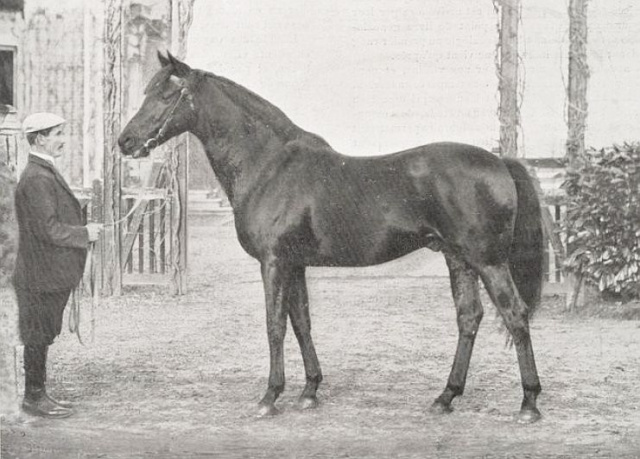
St. Damien won the 1892 Hardwicke Stakes and ran third to Orme in the Eclipse Stakes; he sired classic winners Cheri and Or du Rhin II. Cheri became the third sire of Biribi, but the lineage reached only the fourth generation with foals of Chulo, the Prix Ganay winner.
- St. Damien (GB), 1889
- St. Julien (FR), 1897
- Chulo (FR), 1906
- Cheri (FR), 18981. Poule d'Essai des Poulains
- Or du Rhin (FR), 19071. Prix du Jockey Club, 3. Prix Royal-Oak
- St. Julien (FR), 1897
Bill of Portland (1890)
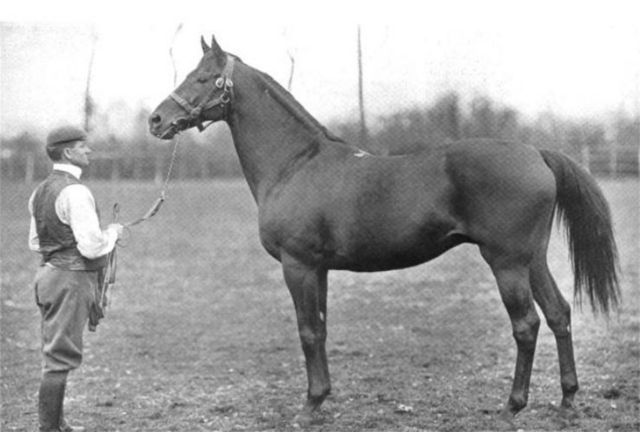
Bill of Portland was stakes-placed at two, including the July Stakes. He was sent to Australia, where his son Maltster won the AJC Derby and became a five-times leading sire between 1910 and 1915. The lineage reached five generations, with sons of David and Winning Hit and their progeny in the 1950s. However, it was of no historical significance (at least from a modern and global point of view).
- Bill of Portland (GB), 1890
- Bobadil (AUS), 1895
- Maltster (AUS), 1897
- Beaverstock (AUS), 1911
- David (AUS), 1917
- Beaverstock (AUS), 1911
- Treadmill (NZ), 1900
- Autumnus (NZ), 1909
- Wining Hit (NZ), 1918
- Autumnus (NZ), 1909
Childwick (1890)
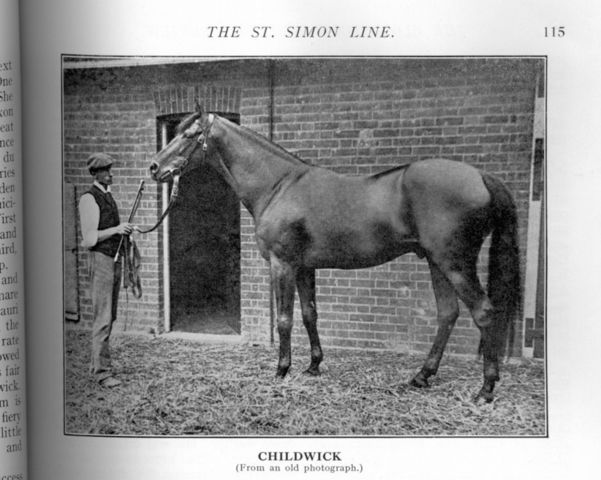
Childwick defeated Callistrate for the 1894 Cesarewitch Handicap, and his foals could win from one to six kilometers. His great daughter La Camargo won 24 of her 34 starts, including both French fillies' classics; Negofol won the Prix du Jockey Club. Negofol's colt Hourless was sent to the US as a yearling and won the Belmont Stakes; his sire followed him across the Atlantic a few years later and became a damsire of Ladkin and Swing and Sway. A special note belongs to Flechois, who lost a classic victory and two runnings of the Prix de l'Arc de Triomphe to great Ksar.
Childwick's lineage reached five generations, and the last foals were sired by Wait a Bit, the Vosburg Stakes winner, in the late 1950s.
- Childwick (GB), 1890
- Negofol (FR), 19061. Prix du Jockey Club, 2. Prix Royal-Oak
- Hourless (GB), 19141. Belmont Stakes
- Flechois (FR), 19182. Prix de l'Arc de Triomphe - 2x
- Coventry (USA), 19221. Preakness Stakes
- Espino (USA), 1923
- Wait a Bit (USA), 1939
- Bounding Home (USA), 19411. Belmont Stakes
- Vito (USA), 19251. Belmont Stakes
- Negofol (FR), 19061. Prix du Jockey Club, 2. Prix Royal-Oak
Florizel II (1891)
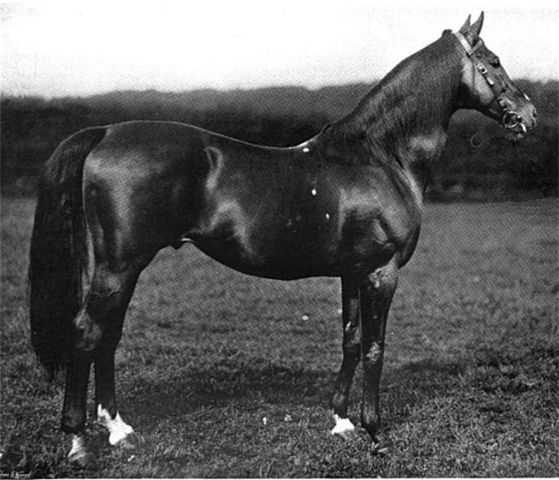
Florizel won the St. James's Palace Stakes over a mile, the Goodwood Cup over 21 furlongs, and ran third in the Ascot Gold Cup. Florizel sired the 2000 Guineas winner Vedas, the Derby Stakes winner Volodyovski, the Irish Derby winner Royal Arch, and the St. Leger winner Doricles; he was also a damsire of admired Sardanapale.
Florizel founded an important French lineage, including the 1936 leading sire Massine and 1958 leading British damsire Mieuxce (Combat, Aristophanes, Reform, Crepello). Massine was the top horse, but his Ascot Gold Cup victory explains a lot about his progeny: the line's classic victors were never public heroes.
Mustang's grandson Native Bazaar and great-grandson Crofthall brought the lineage to the early 1990s but it was long after the line disappeared from the top flat ranks, probably with La Varende and his last foals in 1971.
- Florizel (GB), 1891
- Doricles (GB), 18981. St. Leger
- Consols (FR), 1908
- Massine (FR), 19201. Prix de l'Arc de Triomphe, Ascot Gold Cup
- Laeken (FR), 19291. Prix Royal-Oak
- Strip the Willow (FR), 19291. Prix du Jockey Club
- Maravedis (FR), 1931
- Samaritain (FR), 19411. Prix Royal-Oak
- Souverain (FR), 19431. Prix Royal-Oak
- Scot (FR), 19541. Prix Royal-Oak
- Mieuxce (FR), 19331. Prix du Jockey Club
- Mustang (GB), 1941
- Thirteen of Diamonds (GB), 19491. Irish Derby
- Feu du Diable (FR), 19491. Prix Royal-Oak
- Mustang (GB), 1941
- Blue Moon (FR), 1936
- La Varende (FR), 1949
- Barbieri (GB), 19611. Prix Royal-Oak
- La Varende (FR), 1949
- Massine (FR), 19201. Prix de l'Arc de Triomphe, Ascot Gold Cup
- Consols (FR), 1908
- Volodyovski (GB), 18981. Derby Stakes, 2. St. Leger
- Royal Arch (GB), 19011. Irish Derby
- Vedas (GB), 19021. Two Thousand Guineas
- Doricles (GB), 18981. St. Leger
Florizel's branch is also connected to Russian breeding, and two stories deserve to be told:
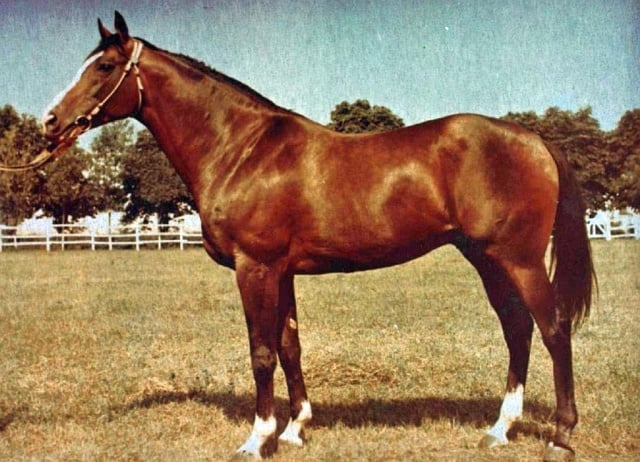
Massine's son Etalon Or, third in the Grand Prix de Paris, started the lineage that led to the world-famous Anilin. If he was born these days, he'd be a global media superstar: descending from many generations of Eastern European horses, Anilin ran fifth in the Prix de l'Arc de Triomphe behind Sea-Bird, and third in the Washington D.C. International behind Kelso.
Russians lost Anilin way too soon as he died at the age of 14. Suffice to say that he sired two Derby winners from eight crops, but also numerous classic and international winners, top two-year-olds and older horses. He also was a Russian leading sire in 1975. His sons at stud, especially Elfast, Eten and Gazolin, were hard to trace even in Eastern Europe, but they are still a great influence in the Russian Stud Book.
- Massine (FR), 1920
- Etalon Or (FR), 19363. Grand Prix de Paris
- Element (RUS), 19521. Russian Derby
- Anilin (RUS), 19611. Russian Derby, Preis von Europe - 3x, 2. Washington D.C. International, 3. Washington D.C. International, 5. Prix de l'Arc de Triomphe
- Elfast (RUS), 19713. Russian Derby, Preis von Europe
- Gazomet (RUS), 19731. Russian Derby
- Zella (RUS), 19731. Russian Oaks
- Gazolin (RUS), 1974
- Sajgon (RUS), 19861. Russian St. Leger
- Razgon (RUS), 19742. Russian Derby
- Gvalt (RUS), 19751. Russian St. Leger
- Elda (RUS), 19761. Russian St. Leger
- Eten (RUS), 19761. Russian Derby
- Galun (RUS), 19762. Russian Derby
- Ahidar (RUS), 19701. Russian Derby
- Altajsk (RUS), 19701. Russian St. Leger, Russian Derby
- Anilin (RUS), 19611. Russian Derby, Preis von Europe - 3x, 2. Washington D.C. International, 3. Washington D.C. International, 5. Prix de l'Arc de Triomphe
- Element (RUS), 19521. Russian Derby
- Etalon Or (FR), 19363. Grand Prix de Paris
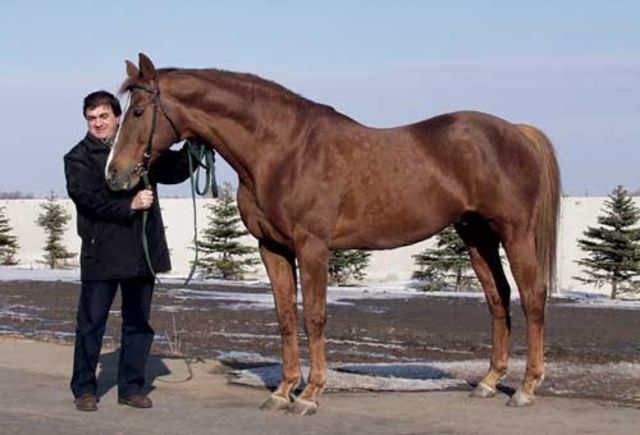
But Russia harbored one more lineage of Florizel: the one originating in Floreal, who won the Russian Derby 1911. It became a cornerstone of Russian breeding with a sequence of Tagor - Granit - Duglas, who sired full brothers Derzkij and Zadornyj. Zadornyj ran fourth in the Washington D.C. International, but his influence ended with his grandson Rans in East Germany in the 1980s. Derzkij, a top local horse, sired four Russian Derby winners, including Floridon, who, in turn, sired another one in Flagman.
Local (and thus great but limited) influence aside, Sajgon and Flagman are the reason to mention these lineages, as they had the last foals incredibly late: around 2005. It's about the same time when Sajgon had foals, too, and it's not just unique within Florizel's branch - it's one of the records among all St. Simons.
- Floreal (RUS), 19081. Polish Derby, Russian Derby
- Tagor (RUS), 1915
- Granit (RUS), 19301. Priz Kalinina
- Duglas (GER), 19441. Russian Derby
- Derzkij (RUS), 19541. Priz Moskvy; champion sire
- Aden (RUS), 19751. Preis von Europe (over Trillion)
- Floridon (RUS), 19751. Russian Derby
- Flagman (RUS), 19831. Russian Derby
- Zadornyj (RUS), 19553. Russian Derby; 4. Washington D.C. International
- Sajan (RUS), 1968Gr.1 winner in Russia
- Zakaznik (RUS), 19681. Russian Derby
- Derzkij (RUS), 19541. Priz Moskvy; champion sire
- Duglas (GER), 19441. Russian Derby
- Granit (RUS), 19301. Priz Kalinina
- Tagor (RUS), 1915
St. Florian (1891)
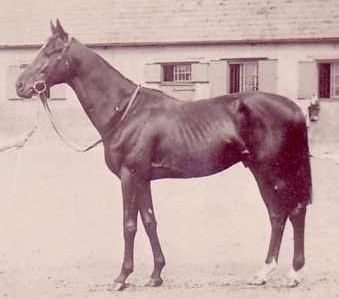
St. Florian won the Duke of York Stakes over a mile, ran second to Ladas in the Newmarket Stakes over 10 furlongs, and fourth in the 2000 Guineas. He died at the age of 7 and left four small crops of foals with no significance, except for Ard Patrick. The top colt of his generation, he was second in the Dewhurst, third to Sceptre in the 2000 Guineas, and won the Derby. Later he defeated both Sceptre and Rock Sand in the Eclipse Stakes.
Surprisingly, Ard Patrick was sold abroad, partially because declining health of his owner. He was bought by Georg von Lehndorff and retired to Gestüt Graditz, where he was later joined by his half-brother Galtee More for a while. Ard Patrick became four times leading sire but sired the only classic winner in the German Derby winner Ariel, who also became his only male successor. Ariel was the third sire of Athanasius, a sire of Ticino. The line didn't reach anywhere further, and the last known foal of Ariel was born in 1928.
One of Ard Patrick's sons, Lucullus, was sent to New Zealand and became the leading sire in 1927/28. His last foals came in the early 1930s, and he didn't leave any successful son at stud.
- St. Florian (GB), 1891
- Ard Patrick (IRE), 18991. Derby Stakes, 3. Two Thousand Guineas
- Lucullus (GER), 1908
- Ariel (GER), 19111. Deutsches Derby
- Ard Patrick (IRE), 18991. Derby Stakes, 3. Two Thousand Guineas
Persimmon (1893)
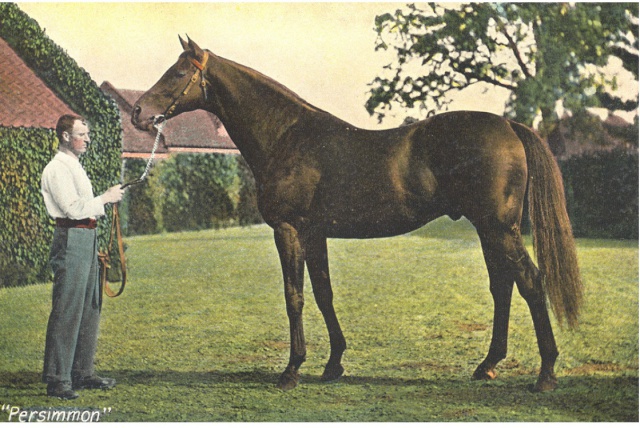
Persimmon won the Middle Park Stakes, the Derby Stakes, the St. Leger, and the Ascot Gold Cup. And he was equally brilliant at stud, where he was the leading sire four times between 1902 and 1912. The sire of immortal Sceptre subsequently became a founder of the most prolific branch of St. Simon's sireline, and there's no need to comment on classic descendants of Princequillo, Prince Bio, and Prince Chevalier.
What does deserve a few words is Your Majesty. The St. Leger winner was sold to Argentina, where he became the leading sire twice and the leading broodmare sire four times. He had a tremendous impact that included Embrujo, Seductor, and Forli. His local descendants in Chile reached the 1940s.
When we skip Persimmon's talent to the performance of his descendants, it's vaguely possible to say that Persimmon inherited Chaucer's position in Great Britain and Rabelais' in France. Besides, he was the first to conquer the US, as Princequillo led the sires' list twice in 1957-58 and Round Table again in 1972. A well-known part of the story is the success of this lineage among broodmare sires: Princequillo earned eight titles, Prince John four, and Speak John added the thirteenth.
I regret skipping details of the branch's success for the sake of the bearable length of the article, but their stories are well known, and I'd like to point out the farewells.
For American Princequillos, Summing's last crop of foals was born in 2004, and Meadowlake overtook him by two more years. If we want to count local ranks, Meadowlake's Gr.3-winning son Luftikus bred his last mare in 2018.
For Prince Bio, most of Sicambre's sons were born in the 1960s, and as far as flat racing is concerned, foals of Margouillat and Vitiges reached the 1980s. Moon Madness (Vitiges) had several foals in France upon his return from Japan as late as 2003.
And for Prince Chevalier, Charlottown's last crop was 1979, and his paternal half-brother Jefferson added his last "flat achievement" in 1981 when siring Marie d'Argonne, a dam of Polar Falcon. Otherwise, he was an active stallion up to 1993.
- Persimmon (GB), 18931. Derby Stakes, St. Leger
- Out of Reach (GB), 1900
- George Smith (USA), 19131. Kentucky Derby
- Fulgeman (GB), 1903
- Furore (GB), 19131. Irish Derby
- Ouadi-Halfa (GB), 19041. Poule d'Essai des Poulains
- Sea King (GB), 1905
- Paul Jones (USA), 19171. Kentucky Derby
- Your Majesty (GB), 19051. St. Leger
- Lord Burgoyne (FR), 19081. Poule d'Essai des Poulains
- Prince Palatine (GB), 1908
- He Goes (GB), 19171. Irish Derby
- Prince Galahad (GB), 1917
- Knight of the Grail (IRE), 19241. Irish Derby
- Prince Pal (USA), 1917
- Mate (USA), 19281. Preakness Stakes, 3. Kentucky Derby
- Rose Prince (FR), 1919
- Prince Rose (GB), 1928
- Princequillo (IRE), 1940
- Hill Prince (USA), 19471. Preakness Stakes, 2. Kentucky Derby
- Prince John (USA), 1953
- Speak John (USA), 1958
- Verbatim (USA), 1965
- Summing (USA), 19781. Belmont Stakes
- Hold Your Peace (USA), 19693. Kentucky Derby
- Meadowlake (USA), 1983
- Success Express (USA), 1985
- Verbatim (USA), 1965
- Stage Door Johnny (USA), 19651. Belmont Stakes
- Speak John (USA), 1958
- Round Table (USA), 1954
- Baldric (USA), 19611. Two Thousand Guineas
- Tambourine (USA), 19591. Irish Derby
- Prince Bio (FR), 19411. Poule d'Essai des Poulains
- Sicambre (FR), 19481. Prix du Jockey Club
- Shantung (FR), 19563. Derby Stakes
- Celtic Ash (GB), 19571. Belmont Stakes, 3. Preakness Stakes
- Athens Wood (IRE), 19681. St. Leger
- Cambremont (FR), 19621. Poule d'Essai des Poulains
- Diatome (GB), 1962
- Steel Pulse (GB), 19691. Irish Derby
- Phaeton (GB), 1964
- Vitiges (FR), 1973
- Le Petit Prince (FR), 19511. Prix du Jockey Club
- Prince Taj (FR), 1954
- Astec (FR), 19641. Prix du Jockey Club
- Pres du Feu (FR), 19551. Poule d'Essai des Poulains
- Sicambre (FR), 19481. Prix du Jockey Club
- Prince Chevalier (FR), 19431. Prix du Jockey Club, 2. Prix Royal-Oak, Prix de l'Arc de Triomphe
- Arctic Prince (GB), 19481. Derby Stakes
- Court Harwell (GB), 1954
- Meadow Court (GB), 19621. Irish Derby, 2. Derby Stakes, St. Leger
- Doutelle (GB), 1954
- Pretendre (GB), 1963
- Canonero (USA), 19681. Kentucky Derby, Preakness Stakes
- Pretendre (GB), 1963
- Charlottesville (GB), 19571. Prix du Jockey Club
- Charlottown (GB), 19631. Derby Stakes, 2. Irish Derby, St. Leger
- Jefferson (GB), 1967
- Son of Love (FR), 19761. St. Leger
- Princequillo (IRE), 1940
- Prince Rose (GB), 1928
- Out of Reach (GB), 1900
St. Frusquin (1893)
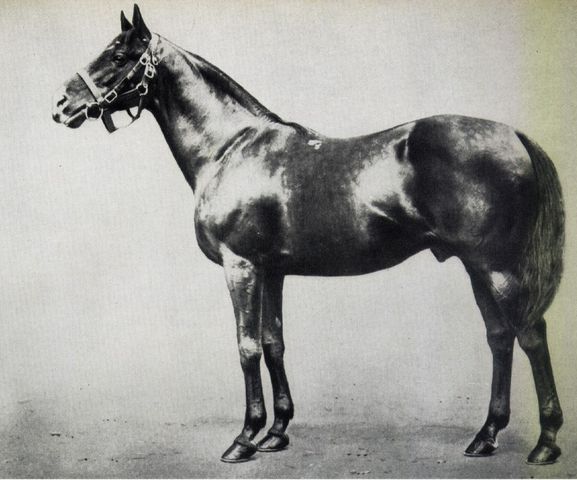
St. Frusquin lost the Derby with Persimmon but defeated him in the Middle Park Stakes and the Princess of Wales's Stakes, in addition to the 2000 Guineas victory. And he joined his brother also in the leading sires' ranks, taking the 1903 and 1907 honors. His best son was St. Amant, who defeated John o'Gaunt in the 1904 Derby after winning the Guineas.
Several of St. Frusquins's sons continued the lineage well below the classic level, and it's impossible to make a detailed overview. Generally, the line reached 3 to 4 generations before falling to obscurity approximately in the 1930s; the Central European lineage of Sanskrit survived almost until the 1970s. St. Frusquin's grandson Paper Money ran third in the 1919 Derby and was imported to New Zealand, where he became the 1928/29 leading sire with the last tail-male descendants in 1940.
St. Wolf turned out to be the biggest influence in Argentina. The Newmarket Stakes winner St. Wolf was active at stud between 1911 and 1932 and became the leading sire from 1922 to 1925. His son Cad was in the top 10 twice; Lombardo was the 1933 leading sire and nine times in the top 10. The same was true of Maron, whose maximum was third place on the general sires' list in 1938.
Although they lack world-famous descendants, all can be traced in interesting pedigrees like stallions Memo and Engrillado or Miss Temple City. St. Wolf himself was the third sire of the leading 1969 damsire Penny Post and of Nigromante, who's known by most fans as a sire of Candy Spots.
The lineage didn't reach beyond the fifth generation and probably ended with Pelito's last foals in the 1940s. Otherwise, Pelito is a little recognized fifth sire of Pleasant Colony.
- St. Frusguin (GB), 1893
- St. Amant (GB), 19011. Two Thousand Guineas, Derby Stakes
- St. Wolf (GB), 1905
- Cad (ARG), 1915
- Hijo Mio (ARG), 1918
- Pelito (ARG), 1929
- Lombardo (ARG), 1921
- Maron (ARG), 1922
- Greenback (GB), 19072. Derby Stakes
- Paper Money (GB), 19163. Derby Stakes
Desmond (1896)
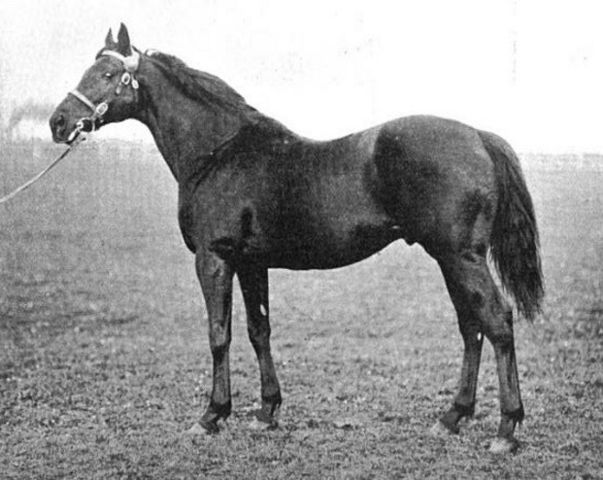
Desmond won the July Stakes and Coventry Stakes over 5 furlongs, but was unplaced at three, as he was no longer "fond of racing." At stud, he joined Persimmon and St. Frusquin as the leading sire in 1913, when Aboyeur was awarded the Derby after the disqualification of another Desmond colt, the Middle Park Stakes winner Craganour. The White Knight won two editions of both the Coronation Cup and the Ascot Gold Cup, and Hapsburg won the Champion Stakes.
Desmond was another sire with many sons at stud, successful across continents. Charles O'Malley, third in the Derby 1910, gained immortality as a damsire of Blenheim II. Demosthenes and Limond were the leading sires in Australia, and Limond added the New Zealand title in 1931. Lomond's son Clackmannan earned two Japanese titles in 1933 and 1934.
Craganour was another surprise sale after the Derby, with destination Argentina. He was one of the best sires of his era but never was the champion sire - because of Diamond Jubilee, St. Wolf, and Your Majesty. He only became the leading damsire in 1936. A similar fate awaited his grandson Parlanchin, who could not beat Congreve in the 1940 and 1941 rankings. Craganour's son Buen Ojo, who won two classics in 1919, was sent to Europe as an eight-year-old and sired the 1000 Guineas third Lindos Ojos, whose family is a firmly established in Europe.
Desmond's lineage reached five generations, and its last foals were New Zealand breds in the early 1950s. Parlanchin's last foals were born shortly before, in 1948.
- Desmond (GB), 1896
- Charles o'Malley (GB), 19073. Derby Stakes
- Lomond (GB), 1909
- Clackmannan (GB), 1919
- Aboyeur (GB), 19101. Derby Stakes
- Craganour (GB), 19102. Two Thousand Guineas
- Buen Ojo (ARG), 1916
- Tanner (ARG), 1921
- Parlanchin (ARG), 1926
- Limond (GB), 1913
Diamond Jubilee (1897)
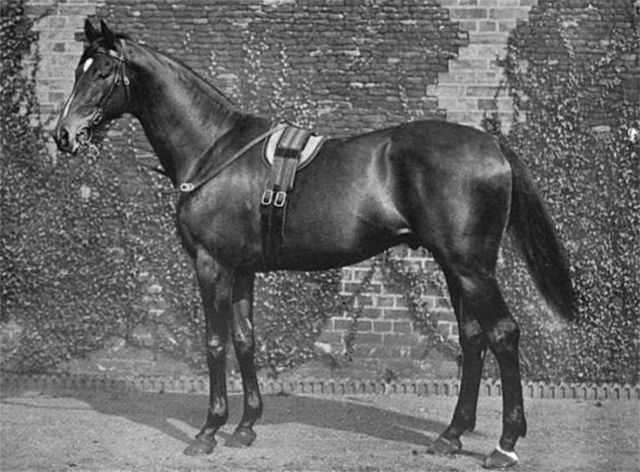
Diamond Jubilee, a full brother to Florizel and Persimmon, won the 1900 Triple Crown but no stud fame awaited him in Great Britain. He could not win a race as a four-year-old in 1901; in the meantime, Florizel sired the 1901 Derby winner Volodyovski and the St. Leger winner Doricles in his first crop. Persimmon's first foals were two-year-olds, but brilliant Sceptre showed up; when Diamond Jubilee retired to stand at Sandringham alongside his brothers, he started covering mares during Sceptre's classic victories. During his five seasons at stud, Vedas won the 2000 Guineas and Keystone the Oaks for Persimmon, while Diamond Jubilee could get just two classic-placed foals, and that was it: the next stop, Argentina.
With considerably larger crops than back at home, Diamond Jubilee led the Argentinian sires' list four times, from 1914 to 1916 and again in 1921; he entered the top 10 seven more times. However, he failed to get an Argentinian successor when Moloch died in his second season at stud, and many other sons were sold abroad, including the Gran Premio Nacional winner As de Espadas.
Some of succeeded at their new homes, especially Chile. Last Reason led the Chilean sires' list from 1926 to 1928, only to be replaced by Campanazo in 1929. And Poor Chap, out of Diamond Jubilee's daughter, was another leading sire in 1939.
Speaking of exotic destinations, it's worth noting that Diamond Jubilee's son British son Diamond Wedding was sent to Japan, and can be traced in many local pedigrees, including the Tokyo Yushun-winning full brothers Kabutoyama and Governor. Diamond Wedding's career seems to last to the late 1920s; Diamond Jubilee himself had his last foals in 1923 and his male influence ended with his sons and Campanazo's foals in the early 1930s.
- Diamond Jubilee (GB), 1897English Triple Crown
- Diamond Wedding (GB), 1905
- As de Espadas (ARG), 19081. Gran Premio Nacional
- Last Reason (ARG), 1909
- Campanazo (ARG), 1912
Pietermaritzburg (1898)
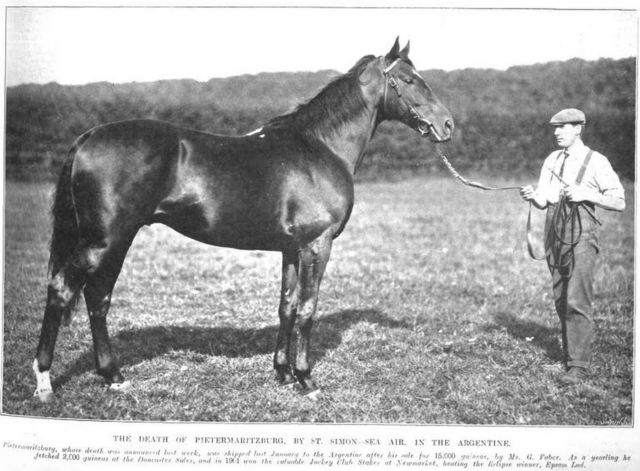
Pietermaritzburg ran second in the Champion Stakes 1901, fourth in the St. Leger, and defeated four-year-old Diamond Jubilee in the Jockey Club Stakes. He was sold to Argentina after only three seasons at stud in England but managed to sire Pietra, a granddam of American colts Good Goods and Brown Bud (sire of Alsab and fourth sire of Secretariat, respectively). Sadly, Pietermaritzburg spent only two seasons in Argentina before his untimely death. He still became the 1911 leading sire.
His son Amsterdam was another top 10 stallion and sixth in his best season in 1934; French-bred Pioneer became the leading sire in Chile, and so did Amsterdam's son Citoyen. Amsterdam had several other sons at stud, but the most interesting part of the line was the fourth-generation descendant Don Bingo. He was imported to the US and became a top handicap horse, winning the Suburban Handicap. Additionally, he lost the Massachusetts and Brooklyn Handicaps to Market Wise and Devil Diver. From a handful of foals, he sired a granddam of Nodouble. Don Bingo's last foals and Pietermaritzburg's last descendants were born in the late 1950s.
- Pietermaritzburg (GB), 1898
- Pioneer (FR), 1906
- Amsterdam (ARG), 1907
- Citoyen (ARG), 1918
- Sandunguero (ARG), 1908
- Serio (ARG), 1921
- Don Bingo (ARG), 1939
- Serio (ARG), 1921
William the Third (1898)
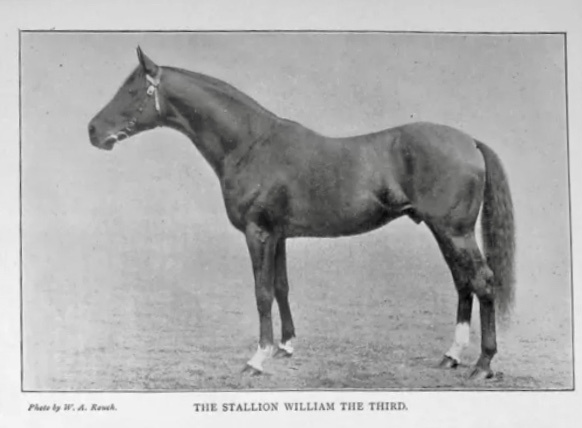
William the Third ran second to Volodyovski in the 1901 Derby but was a top stayer, winning the 1902 Ascot Gold Cup and Doncaster Cup. He sired French & British 1000 Guineas winners Ronde de Nuit and Winkipop, but his best son, Willonyx, was another Ascot Gold Cup winner.
William the Third had several sons at stud but was also a damsire of Copyright and Trimdon or the third sire of Felstead, Dhoti, and Mon Talisman. His son Nassovian was a damsire of Display. Another son, Sandal, was sent to Argentina and sired leading broodmare sire Macon, a damsire of Seductor. Sandal himself influenced Emerson or Petare.
The lineage reached 4-5 generations and disappeared in New Zealand with an unimportant lineage of Nassau in the 1940s.
- William the Third (GB), 1898
- Sandal (GB), 1908
- Macon (ARG), 1922
- Nassau (GB), 1910
- Surveyor (NZ), 1916
- Croupier (NZ), 1928
- Surveyor (NZ), 1916
- Nassovian (GB), 1913
- Sandal (GB), 1908
Chaucer (1900)
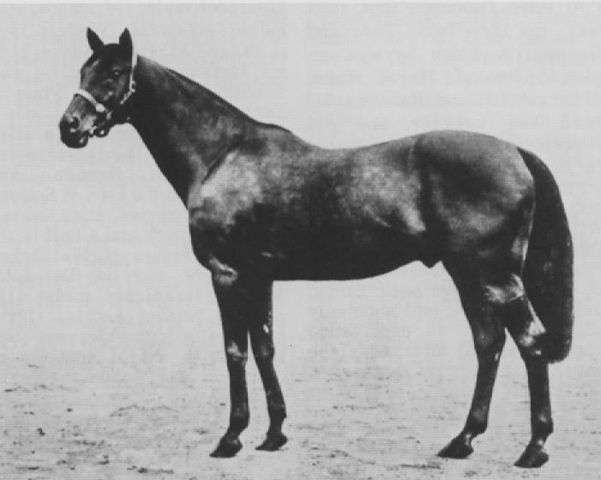
Chaucer won the Gimcrack Stakes, but his three-year-old campaign was affected by a stable epidemic. His best son was Stedfast, the top miler who won the Champion Stakes. Prince Chimay ran third to Gainsborough in the September Stakes - a war substitution for St. Leger; he defeated him in Gainsborough's final start, the Jockey Club Stakes, at almost the same distance.
Chaucer's claim to fame lay somewhere else than producing runners and stallions. He became the leading British broodmare sire in 1927 and 1933 and rewrote the future of the Thoroughbred like few others. Canyon produced Colorado, who influenced Combat or Djebel's Clairon; Lady Nairne added Manna's Colombo, who kept alive his small lineage. Scapa Flow had full brothers Pharos and Fairway - Pharos's Nearco became the ancestor of the majority of today's thoroughbreds, and although Fairway lost this battle, his descendants secured 13 titles of the leading British sires until the early 1980s and shaped the breed. Selene produced another dynasty founder in Hyperion and full brothers Sickle and Pharamond II - the former is the ancestor of Native Dancer and Mr. Prospector, and the latter of Tom Fool. Even though it's quite a thoroughbred alphabet, I couldn't resist summarizing Chaucer's influence, which covers basically the entire modern breeding.
As for male influence, Stedfast's sons were mostly sent to Australia, and the lineage The Night Patrol - Powerscourt - Comic Court brought Chaucer into the late 1950s but was of no long-term influence.
Prince Chimay continued the lineage to Vatout, and his sons Vatellor and Bois Roussel became leading sires in France and Great Britain, respectively. So became Tehran. Tulyar fell short of this honor but became an valuable producer of mares: he influenced Shergar, Generous, American colts Honest Pleasure or Irish Castle, New Zealand champion sires Zamazaan and Three Legs, and Pompeii Court.
While the European success (not so much influence) remained somewhat limited, the line produced several champion sires abroad. Bois Roussel's son Delville Wood was the leading Australian sire for five years in a row, between 1953 and 1957. Vatellor's son Le Filou was New Zealand champion sire four times between 1962 and 1967, and Hindostan was Japanese one seven times between 1961 and 1968, only defeated by Solonaway in 1966.
European and New Zealand influence of Chaucer ended similarly around the 1960s. Hindostan's Triple Crown winner Shinzan had his last foals in the second half of the 1980s. But both were beaten by the American branch of Gallant Man, a British-bred colt who won the Belmont Stakes after running second in the Kentucky Derby. His grandson Elocutionist won the Preakness in 1976, and great-grandson Demons Begone won the Arkansas Derby Gr.1. Demons Begone had his last foals in 2002.
- Chaucer (GB), 1900
- Prince Chimay (GB), 19153. September Stakes
- Vatout (FR), 1926
- Vatellor (FR), 1933
- Pearl Diver (FR), 19441. Derby Stakes
- My Love (FR), 19451. Derby Stakes
- Le Filou (FR), 1946
- Bois Roussel (FR), 19351. Derby Stakes
- Tehran (GB), 19411. St. Leger, 2. Derby Stakes, 3. Two Thousand Guineas
- Tabriz (IRE), 1947
- Taboun (FR), 19561. Two Thousand Guineas, 2. Poule d'Essai des Poulains
- Tulyar (GB), 19491. Derby Stakes, St. Leger
- Tale of Two Cities (IRE), 1951
- Cougar (CHI), 1966
- Gato del Sol (USA), 19791. Kentucky Derby, 2. Belmont Stakes
- Cougar (CHI), 1966
- Tabriz (IRE), 1947
- Delville Wood (GB), 1942
- Migoli (GB), 1944
- Gallant Man (GB), 19541. Belmont Stakes, 2. Kentucky Derby
- Gallant Romeo (USA), 1961
- Elocutionist (USA), 19731. Preakness Stakes, 3. Kentucky Derby
- Recitation (USA), 19781. Poule d'Essai des Poulains
- Demons Begone (USA), 1984
- Elocutionist (USA), 19731. Preakness Stakes, 3. Kentucky Derby
- Gallant Romeo (USA), 1961
- Gallant Man (GB), 19541. Belmont Stakes, 2. Kentucky Derby
- Hindostan (GB), 19461. Irish Derby
- Shinzan (JPN), 1961Japanese Triple Crown
- Ridge Wood (GB), 19461. St. Leger
- Fraise du Bois (FR), 19481. Irish Derby, 2. St. Leger
- Tehran (GB), 19411. St. Leger, 2. Derby Stakes, 3. Two Thousand Guineas
- Vatellor (FR), 1933
- Vatout (FR), 1926
- Prince Chimay (GB), 19153. September Stakes
Rabelais (1900)
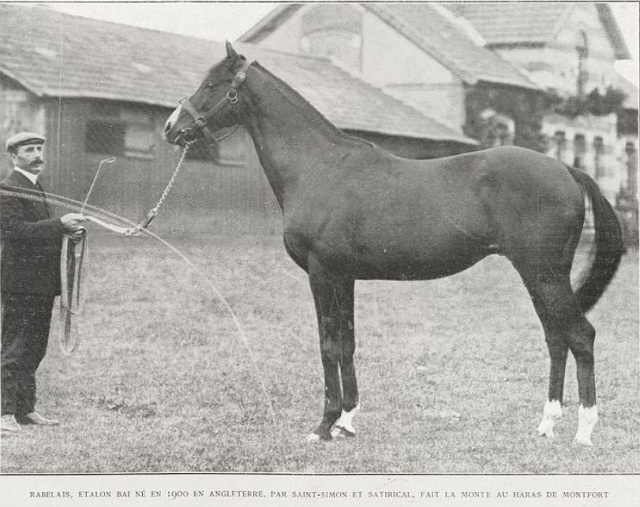
Rabelais won the National Stakes over 5 furlongs as a two-year-old, ran third in the 2000 Guineas behind Rock Sand, fourth in the Derby, and won the Goodwood Cup the same year. As a four-year-old, he was sold to France and became St. Simon's first leading sire in France in 1909, just before Simonian. He repeated the achievement twice more until 1926. Rabelais was a remarkably vital stallion, covering mares at the age of 27 and probably even after. Rabelais died in November 1928, due to complications from a ridiculous surgical procedure in hopes of improving his fertility.
In his first crop, Rabelais sired the French Guineas winner Verdun. His son Verdier emulated him with a third-place finish, but it was Verdun's fifth crop already and he was gone to Argentina by this time. His son Baranquerro was fifth three times on the local sires' list and is the third sire of Montparnasse, who's, in turn, the third sire of Sunday Silence. Otherwise unimportant, this lineage survived until the end of the 1960s.
While Verdun is more a rarity, Durbar was a top French colt - the Prix du Jockey Club victor who also ran third to Sardanapale and La Farina in the Grand Prix de Paris. Durbar didn't leave a male successor but was a sire of great significance: a damsire of Tourbillon and the third sire of Omaha, Flares, Johnstown, and Djeddah.
Another Rabelais colt, Havresac, made history as both a damsire of Nearco and a tail-male ancestor of Ribot. In my work, Ribot is assigned his own sireline for two reasons: a) he was one of the greatest European champions of all time, and it's worth tracing his blood, and b) his sons were very strong tail-male successors who further branched the line. The sireline didn't develop into many generations but definitely shaped the breed. For these reasons, let's leave Ribot for another day, and we can't move on to other sons of Rabelais.
We'll be quicky done with Radames, who was not a good sire, and Motrico was a late-maturing sire of stayers. Biribi won the Arc and became the leading French sire in 1941; he was a classic sire who contributed to several stallions, Le Haar included. His male descendants of low importance had the last progeny in the 1960s, with one exception: Birikil, who was sold to Argentina. He founded a short lineage of Birikil - Biron - El Curaca - El Virtuoso, which was of no importance, but El Virtuoso was fourth on the general sires' list in 1984, and his last crop was born in 1990: long after the French part of the branch was gone. Birikil was also the fourth sire of Interprete, one of the best Argentinian damsires of the modern era.
Rialto was a damsire of Sicambre, but his main achievement was siring Wild Risk, a double winner of the Grande Course des Haises d'Auteuil. A hurdler becoming the double champion and proven classic sire is a little pinch to modern breeding, which is oriented purely and only on the top performers. As it turned out, Wild Risk sons were better damsires - a treat traceable throughout the whole sireline. Worden was the leading broodmare sire in 1975-76, and he was a damsire of Rarity, Dictus, or Grundy. His son Armistice would add Val de l'Orne. Vimy was a damsire of Busted and High Top. Le Fabuleux was a damsire of Bellypha, Unbridled, and the third sire of Bering. And Wild Risk himself would add a jewel: Blushing Groom.
Sons of Le Fabuleux, especially Effervescing in the US, took the Rabelais' branch to the 1980s, and the national hunt progeny would cross the border of the 21st century. But outside of Ribot, that was it for Rabelais.
- Rabelais (GB), 1900
- Verdun (FR), 19061. Poule d'Essai des Poulains
- Durbar (USA), 19111. Derby Stakes
- Havresac (FR), 1915
- Cavaliere d'Arpino (ITY), 1926
- Bellini (ITY), 19371. Derby Italiano, St. Leger Italiano
- Tenerani (ITY), 19441. Derby Italiano, St. Leger Italiano
- Ribot (GB), 19521. Prix de l'Arc de Triomphe
- Tenerani (ITY), 19441. Derby Italiano, St. Leger Italiano
- Bellini (ITY), 19371. Derby Italiano, St. Leger Italiano
- Cavaliere d'Arpino (ITY), 1926
- Radames (FR), 1915
- Motrico (FR), 19251. Prix de l'Arc de Triomphe - 2x
- Ramus (FR), 19191. Prix du Jockey Club
- Biribi (FR), 19231. Prix Royal-Oak, Prix de l'Arc de Triomphe, 2. Prix du Jockey Club
- Birikil (FR), 1936
- Mat de Cocagne (FR), 1948
- Le Pacha (FR), 19381. Prix du Jockey Club, Prix Royal-Oak, Prix de l'Arc de Triomphe
- Birikil (FR), 1936
- Rialto (FR), 19232. Prix de l'Arc de Triomphe
- Wild Risk (FR), 1940
- Worden (FR), 19493. Prix de l'Arc de Triomphe
- Marino (FR), 1956
- Carvin (FR), 19623. Prix du Jockey Club
- Bon Mot II (FR), 19631. Prix de l'Arc de Triomphe
- Marino (FR), 1956
- Vimy (FR), 19521. King George VI. and Queen Elizabeth Stakes
- Le Fabuleux (FR), 19611. Prix du Jockey Club
- Worden (FR), 19493. Prix de l'Arc de Triomphe
- Wild Risk (FR), 1940
Summary
Let me start this chapter with one context. As I hinted, greatness is often robbed of a proper perspective. Now that we're used to Phalaris, Nearco, and Northern Dancer, we tend to overlook the achievements of other sirelines. In the case of St. Simon, it's not just the impact - it's the pure duration of his sireline.
During the 20th century, we have seen many other sirelines rise and fall. Fairway, born in 1925, enormously successful and beating St. Simon since the 1970s, is gone. Another great rival, Hyperion, was born half a century (!) later and is fighting for survival. In fact, various Nasrullahs and Northern Dancers were "able" to die out.
St. Simon's line is alive for more than 140 years. It's an unbelievable achievement, worth great appreciation.
Since the overview is quite long, let's summarize the duration of particular branches:
- - Simonian, St. Damien, and St. Florian were gone in the 1920s
- - Diamond Jubilee's Chilean descendants last appeared in the 1930s
- - St. Frusquin's Argentinian and William the Third's New Zealand progeny is traceable to the 1940s
- - Bill of Portland, Childwick, Desmond, and Pietermaritzburg lasted until the 1950s
- - French Florizels sang their swan song in the early 1970s
- - Rabelais cleared the flat ranks in the 1980s
- - Persimmon and Chaucer, thanks to their American branches, reached the early 21st century
As I've mentioned multiple times, modern St. Simons are still alive. Now, where can we find them? The text doesn't directly suggest the answer, but you will find it quite logical: it's not in Europe anymore.
Current St. Simons
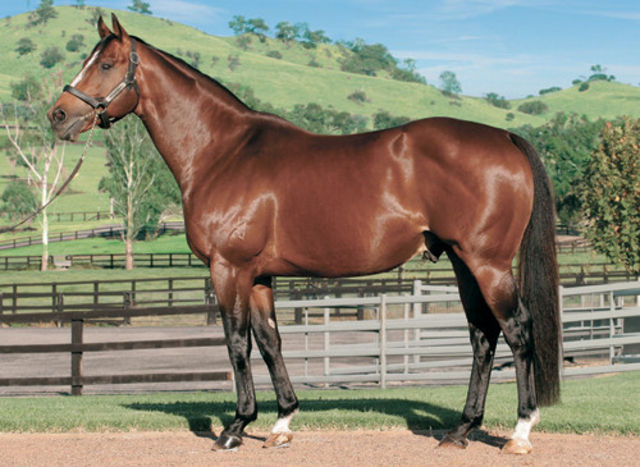
To trace the first one, we must return to the United States and the unmarked name "Success Express" in Persimmon's scheme. The colt won the 1987 Breeders' Cup Juvenile and ran some good races before the Kentucky Derby, but did not win again and was sold to stand in Australia.
His first crop included New Zealand Gr.1 miler Al Akbar, who became famous as a damsire of Winx. Success Express himself became a damsire of several stallions - Oratorio, Duporth, Squamosa, Shamus Award, and above all, the mighty Savabeel. A rare success was the only of his sons: Mossman.
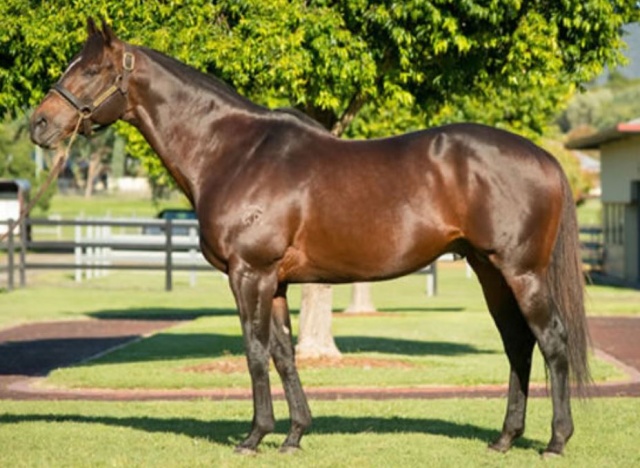
A Gr.1 winner of today's T.J. Smith Stakes and multiple Gr.1-placed miler, Mossman sired several Gr.1 runners. A list of his best sons is stunning, as almost all are geldings. But one of them was not, and at the age of 17, he's still active at stud. His name is Love Conquers All, and for the 2024 breeding season, he was available at Clear Mountain Stud.
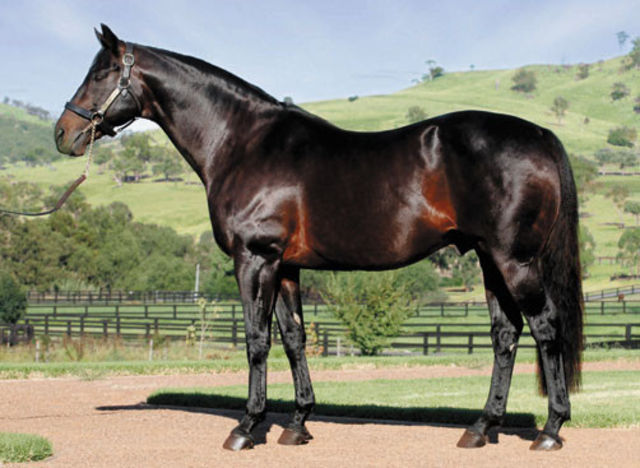
The second story is even more fascinating. Let's return to Persimmon's scheme, only this time to Shantung. He was not a big winner - he lost the Derby to Parthia and the Grand Prix de Saint-Cloud to Herbager. Shantung sired several classic-winning fillies, including the Oaks winner Ginevra, and became a damsire of Young Generation, a sire of Cadeaux Genereux. But nobody could suspect him of playing any role as a sire of stallions.
His best, Felicio, avenged him in winning the Grand Prix de Saint Cloud, but his better effort was a second-place finish to Royal Palace in the 1968 King George VI. and Queen Elizabeth Stakes, with the Arc winner Topyo third. Felicio was sold to Brazil and left 1971 - 1983 crops. Felicio's career is long gone, but he sired two unbeaten Triple Crown winners: African Boy and Itajara.
For unknown reasons, African Boy left a handful of foals in two or three crops. Itajara wasn't much luckier with seven crops. They included two local Gr.1 colts who proved their class in the United States: Romarin and Siphon. Romarin ran second in the Grande Premio Derby Paulista over 12 furlongs and was defeated only by Fastness in the Eddie Read Handicap Gr.1. He became a Gr.1 sire and had several sons at stud - Pedra de Ouro, Anana Fitz, or O Dragao, but all of them have only a few traceable foals in the first half of 2010.
Siphon is a more famous name than Romarin. A Gr.1 winner over a mile in Brazil, he became the top Californian runner for Richard Mandella. He won the 1996 Hollywood Gold Cup over Geri, lost the famous 1996 Pacific Classic edition to Dare And Go and Cigar, and finished second to Singspiel in the Dubai World Cup. After his Dubai trip, he defeated his stablemates Sandpit and Gentlemen in the 1997 Santa Anita Handicap and lost the Gold Cup and Pacific Classic to the latter.
Siphon started his stud career in the States, and his first crop included the Hollywood Futurity Gr.1 winner and the Kentucky Derby contender Siphonic. He was followed by another classic hopeful in I'm the Tiger and a Gr.1-winning sprinter Sharp Impact. With not exactly an impressive resume, Siphon shuttled to Brazil for the first time in 2006 and returned for good in 2010.
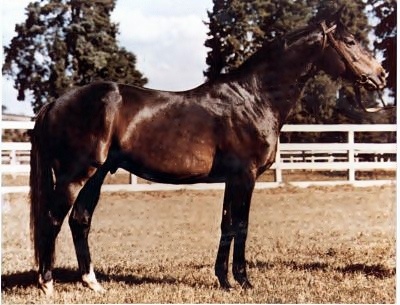
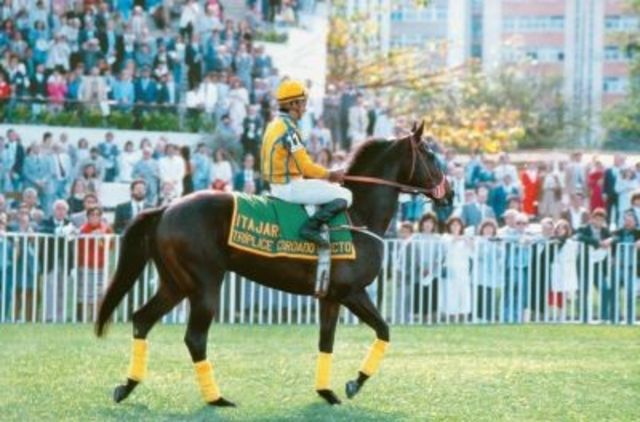
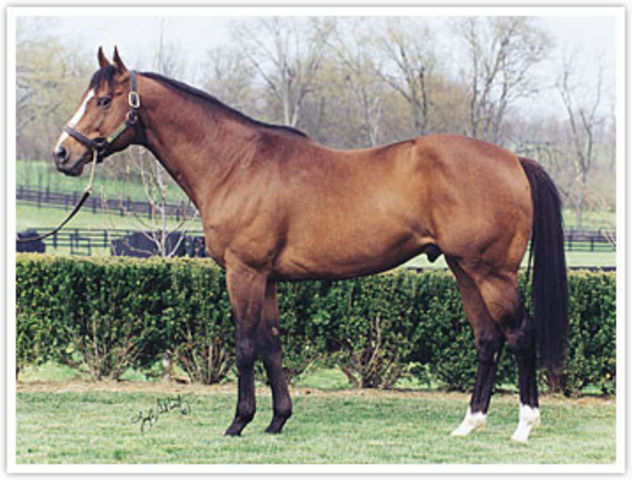
Siphon first captured my attention when I noticed Honoravel Bisca, his Gr.1-winning filly of 2018 - and her sire was born in 1991. Siphon himself died in 2019, and it's sad to say that he was no star even in his home country. However - there's still a small chance.
In 2013, Siphon sired Guaruman, who surprisingly took the first leg of the Brazilian Triple Crown, the Grande Premio Estado do Rio de Janeiro. Guaruman was both a dirt and turf runner and raced at least until 2017, probably even in 2018. Except for old articles and pictures, he's impossible to trace online, and if he had any foals, we have to wait for them to show in international online sources.
We can probably place more hypothetical hopes on King Four, a 2018 colt who's a proven Gr.3 horse and third in the 2021 Grande Premio Derby Paulista Gr.1. King Four is still racing - and winning at listed level - in 2023.
And one surprise...
Just hours before publishing, when I was doing a final check for typing errors and data mistakes, I discovered one more living branch. It never occurred to me that Demons Begone could have sons at stud - but he did. In one of his last crops, he sired Demon Warlock, the 2004 Washington Horse of the Year, and, subsequently, a local sire. His foals were racing in 2021, and in 2022, Demon Warlock was covering mares, according to the Jockey Club data.
Therefore it's safe to proclaim Chaucer alive, too, which is a great surprise.
Closure
Let's be clear: none of these four horses - one old stallion, one aging stallion, one retired horse, and one youngster on a racetrack - has any big chance of continuing the St. Simon's line.
But technically, the sireline is alive, and maybe we're witnessing its swan song. Wouldn't you think it's important to acknowledge and appreciate the whole sireline while we can...?
To end on a more practical note, I believe that St. Simon offers the best analogy to the modern empire of Northern Dancer. The number of their male descendants and branches is strikingly similar. So was their early success, although notice that in this context, "early" means several decades. On the other hand, see what a "stallion's success" meant back in the era of Florizel or Persimmon and what it means now with Galileo. Quite a distortion, isn't it...?
But the current situation of St. Simon should remind us also another thing: any empire can turn to dust.
Not that anybody could believe that this is the case with Northern Dancer right now. But nobody would believe that about St. Simon in the 1960s either.
We see Northern Dancer shaping up: some branches proliferating and some already gone or close to it. Considering major lineages, Nijinsky and Lyphard were the first to draw the short straw, and their fate hangs by a thread. Can you guess who's the third in line?
In any case, there's no reason to ignore the inspiration that St. Simon has to offer. We've seen both the long-extinct branches and the fate of Princequillo, Bois Roussel, or Wild Risk. When we compare strictly the development of sirelines of St. Simon and Northern Dancer, Danehill's branch didn't even reach Princequillo's position yet! There's still a lot of "gropwing up" to do on Northern Dancer's side, and we no idea what will happen in the next three or four generations.
Maybe, Northern Dancer is also the best parallel for St. Simon. Because seeing it from this perspective, the story of St. Simon brings the dose of two emotions connected with the turf: utmost admiration - and humility before the run of time.